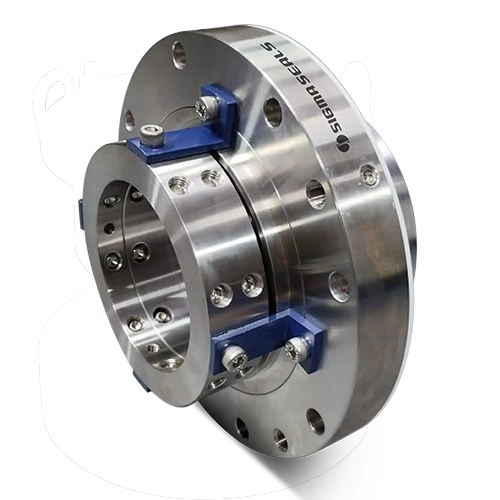
Slurry mechanical seals are an essential component in industrial settings. They are used to provide a seal between rotating parts, to prevent fluid leakage and contamination. Slurry mechanical seals work by using centrifugal force to create a barrier between two parts that contact each other during operation.
In the most basic form, the rising pressure generated by the movement of the liquid or slurry creates a barrier between two concentric rotational parts. This is achieved by placing a stationary metal ring (usually stainless steel) against a rotating part. The metal ring forms a metal-on-metal seal between the two parts, which prevents the escape or suction of any contaminants.
Slurry mechanical seals come in a variety of shapes and materials, depending on the operation’s requirement. Ceramic, carbon, rubber and other soft materials are used for sealing wet slurry systems, while ceramics, tungsten carbide, and metal are used for dry applications. The material is also used to create a variety of shapes, such as flat face, single and double-lip, and double-cone seals. The shape of the seal is also important as it defines the amount of clearance between the surfaces.
In addition to the material and shape of the seal, another critical aspect to consider when selecting a slurry mechanical seal is its operating temperature range. Different seal materials have different temperature limits, so it is important to select the right one to ensure it will not fail even when exposed to high temperatures. Additionally, the right seal shape and material must be selected to ensure the seal has enough pressure to resist the rotational forces exerted by the slurry, while also providing enough leakage control to keep contaminants away.
In summary, slurry mechanical seals are an important component used to ensure the efficient and correct operation of industrial processes. The right material, shape and temperature rating must be selected to ensure the seal is able to withstand the forces exerted by the slurry, while also providing enough leakage control to keep contaminants away. With all of these factors in mind, slurry mechanical seals can be an invaluable tool in industrial operations.